Blogs
The Hidden Costs of Ignoring Fuel Maintenance in Emergency Systems
We all count on emergency generators to work when we need them most. Whether it's a hospital, a data centre, or a commercial building, those systems are built to operate when the power cuts out—and they need to work, no questions asked.
But there's one thing many people don't think about until it's too late: the fuel. It just sits there in the tank, quietly aging, while everyone assumes it's ready to go. And when fuel gets contaminated, the consequences can be really costly.
One key aspect of maintaining the reliability of these systems is fuel polishing for emergency systems. This process helps keep stored fuel clean, thereby preventing costly breakdowns when power is lost.
Keep reading to learn more.
What Happens to Stored Fuel Over Time?
Diesel fuel has a shelf life. It doesn't just sit there unchanged. Over time, it reacts with air, absorbs moisture from condensation, and becomes a perfect host for microbial growth. If left untreated, it turns sludgy, acidic, and corrosive. And you definitely don't want these things running through a sensitive engine.
These changes don't happen overnight, which is part of the problem. They build up quietly, out of sight. So when your generator finally fires up during an emergency, the fuel system may already be struggling—and sometimes, it just fails.
Also read - How Offshore Fuel Polishing Ensures Reliable Emergency System Performance.
How Do These Fuel Problems Turn Into Real Costs?
The moment fuel quality drops, efficiency drops with it. Engines work harder, filters clog, and parts wear out faster. And if you're unlucky enough to experience a full generator failure during an outage? That's when the big bills show up fast.
According to OxMaint's 2025 industry report, companies using preventive maintenance save up to 45% on unexpected repairs and extend their equipment lifespan by up to 60%. That's not just theory, it's happening across the board.
Another 2025 report found that companies that use preventive maintenance see up to 35% less equipment downtime and can cut repair costs by 12–18% overall.
Some direct costs that come with fuel neglect-
- Replacing clogged filters, damaged injectors, or fuel pumps
- Paying for emergency service calls during unplanned outages
- Having to dispose of contaminated fuel often as hazardous waste
- Cleaning sludge and microbial growth out of tanks
- Facing fines or violations for failed emissions or fuel storage issues
What About the Costs You Don't See on a Bill?
Some of the most damaging effects of fuel neglect never show up on an invoice. Downtime during an emergency, lost production, ruined inventory, even lost customer trust—these are the consequences that really create impact.
If your system goes down in the time of need, you're not just fixing equipment—you're going to worry about protecting your people, your business, and your reputation.
Here are a few hidden costs that are easy to miss-
- Lost productivity and revenue during outages
- Spoiled goods or damaged systems due to a power failure
- Increased fuel consumption from poor combustion
- Shortened generator lifespan
- Reputational damage when reliability takes a hit
According to industry benchmarks, even an hour of unplanned downtime in heavy industries can cost thousands. If your generator fails to start because of bad fuel, those costs don't wait for you to catch up—they hit immediately.
Is Fuel Maintenance Really Worth the Effort?
It's not that hard to keep fuel in good condition. With proper polishing, filtration, and regular inspections, stored diesel can stay clean and stable for years. And with today's smart monitoring tools, you can automate most of the process.
Fuel maintenance is one of those things that pays for itself fast. In fact, most companies that make it part of their routine cut down on service calls, lower fuel costs, and extend the life of their entire system. Using a high-quality fuel filter helps remove water, sludge, and microbial contamination before it reaches your engine.
If it's been a while since your fuel was tested or polished or if you're not sure when it was last checked at all, it's time. Get ahead of the problem, because once fuel goes bad, it doesn't recover on its own.
- Start with a proper fuel inspection to check for contaminants.
- Install filtration systems that automatically keep your fuel clean and stable.
- Partner with a trusted supplier who makes the process easy and cost-effective.
The bottom line
Backup systems are there to protect you, but without clean fuel, they can quickly become a liability. Sometimes, you may think skipping fuel maintenance is a small shortcut. However, it often leads to bigger problems down the line. That's why fuel polishing for emergency systems really matters for keeping your generators performing when the power goes out.
If you want efficient, proven solutions to fix fuel issues, check out Njord Filtration. Browse the range of high-quality fuel filters today and keep your backup system running the way it should. For any order-related query, call +31-13-7640706 or email us at This email address is being protected from spambots. You need JavaScript enabled to view it..A Look Inside: The Parts of an Offshore Fuel Polishing System
Working in the marine industry teaches you from experience. So, now you know that you need to keep your fuel clean. But you may not know how the cleaning machine itself actually works. In this blog, we will have a look at the main parts that make up an offshore fuel polishing system. When you understand these parts, you can see how the system protects your engines and generators.
Why is it a Good Idea to Know the System's Parts?
When your crew understands what each part of the fuel polishing system does then it becomes easier for them to run the equipment the right way. It also helps them to spot any small issues before they can turn into bigger problems on your vessel or rig. This knowledge can help you keep your machine in a good working order for a long time.
It is also helpful to know about the different diesel fuel filtration system components when you are buying a new unit. When you understand what the parts do, you can better compare different systems on the market. This helps you choose a system that has the right parts for your vessel's specific needs.
What are the Main Components of the System?
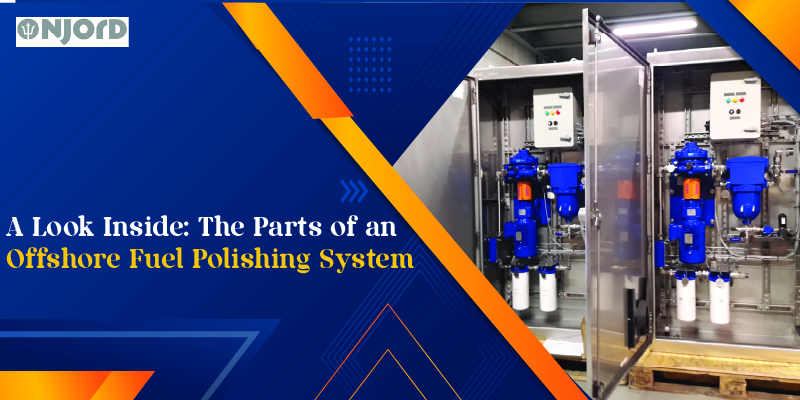
This is a look at how does fuel polishing work by using a few key parts together:
- The Fuel Pump: The pump is the heart of this system. It is a strong industrial pump which is made to pull the dirty fuel from the very bottom of your storage tank. It then creates the pressure that pushes the fuel through all the other cleaning stages of the unit.
- The Water Separator: This part of the system is the first step in the cleaning process. It is made to take the very small water droplets in your fuel and combine them into bigger drops. These bigger drops of water can then be easily drained away, which is a big part of marine diesel fuel cleaning.
- The Particulate Filters: After the water has been taken out, the fuel then passes through one or more filters. These filters are made to catch and remove all the solid things in your fuel like bits of rust, dirt, and sludge. The filters often get finer in each stage to remove even very small particles.
- The Control Panel: The control panel is the brain of the operation. This is where you can set the system to run on an automatic schedule, so it works by itself. It also shows you the status of the system and an option that you can use to it will give you an alarm if a filter needs change.
(Also Read: How It Works: Offshore Fuel Tank Cleaning and Diesel Filtration System? )
How Do These Parts Work Together?
These parts all work together in a continuous cycle to keep your fuel clean.
- A Continuous Cleaning Cycle: The whole process works in a loop. The pump pulls the dirtiest fuel from the bottom of the tank, the separator takes out the water, the filters take out the first, and the clean fuel is sent back to the top of the tank. This cleaning cycle runs over and over again to keep the fuel in good shape.
- A Multi-Stage Process: It is important to know that this is not just one simple filter. The process uses multiple stages with different parts for different jobs like one for water and others for solid dirt. This is what makes a professional offshore fuel polishing system so good at preventing fuel contamination at sea.
- Automated Protection: Because the control panel runs the system on a set schedule, your fuel is being protected all the time. Your crew does not have to remember to turn it on and off. It is a constant and automatic process which keeps your fuel ready to use.
Moving Forward
An offshore fuel polishing system is a well-made piece of equipment with several parts which work together as a team. When you understand these parts, you can see why it is such a dependent way to protect your offshore engines from dirty fuel. Explore our website to see different systems for your vessel.
Contact us at This email address is being protected from spambots. You need JavaScript enabled to view it. if you want to talk to our filtration experts for any questions you have about the offshore fuel polishing system.Diesel Generator Failure in Data Centers: How Fuel Filtration Can Prevent It?
Most people think of data centers as highly controlled environments—full of blinking lights, air conditioning, and redundant systems designed to keep everything running no matter what. But there’s one common weak spot that gets overlooked far too often: fuel quality in the backup generators.
In 2025, research indicates that over 90% of medium and large enterprises report losses exceeding $300,000 per hour of downtime. In high-risk environments like data centers, that makes backup power absolutely non-negotiable. And yet, generators still fail frequently. One of the top reasons? Dirty, degraded, or contaminated diesel fuel.
Let’s talk about why it happens, what it costs, and how fuel polishing in a data center can keep your data center out of downtime.
Why Generators Fail?
Diesel generators are critical for data centers. When the grid goes down, they’re expected to kick in within seconds and carry the full load without hesitation. However, diesel fuel isn’t static, it changes over time. And that’s where the problems start.
Water contamination is one of the primary reasons that enters tanks through condensation or poor seals. Once it’s there, it creates the perfect environment for microbial growth—what some technicians call “diesel bug.” The byproduct is sludge. Sludge clogs fuel filters and lines. That alone can stop a generator from running.
Particles and sediment build up over time as well—rust from tank walls, dust from air ingress, and other contaminants that settle and spread. And then there’s oxidation, which happens when diesel ages. It thickens and breaks down, turning gummy and unstable.
All of these issues can lead to something you never want to deal with in a crisis: your generator failing to start, or worse, shutting down mid-run.
The High Cost of a “Small” Problem
This isn’t just about inconvenience. It’s about real business impact. A recent study found that 54% of major data center outages in 2025 resulted in losses exceeding $100,000, with nearly one in five exceeding the $1 million mark.
And many of those were caused not by storms or hardware faults—but by failed generators that hadn’t been properly maintained, or had been running on contaminated fuel. It’s not hard to see the pattern: you can have the best generator money can buy, but if the fuel feeding it is compromised, the whole system is at risk.
How Fuel Filtration Solves the Problem?
Fuel filtration—especially when paired with an efficient fuel polishing system—helps ensure the diesel in your tanks stays clean, dry, and ready to use.
Here’s what a good filtration system actually does:
- Removes water before microbial growth or corrosion happens
- Traps particulates before they reach engine components
- Circulates and filters stored fuel on a regular schedule
- Extends the usable life of diesel so you’re not wasting fuel or risking poor performance
With the right setup, you’re not just fixing problems—you’re preventing them. And in a world where the average cost of a serious outage is so high, prevention becomes more essential.
How to get started in your facility?
If you’re responsible for a data center, here are a few practical steps you can take:
- Test your stored diesel fuel regularly – Contamination often goes unnoticed until the generator fails. Don’t wait that long.
- Invest in a quality fuel filtration or polishing system – It pays for itself the first time your generator starts up flawlessly during a power cut.
- Include filtration into your maintenance routine – It’s not just about equipment; fuel needs the clean-up, too.
- Train your team – Ensure that the facilities staff and operators understand how fuel degradation works and how to identify warning signs.
The bottom line
Even if you’ve got the best backup generator, it can’t help if the fuel running it is unstable or full of sludge. Fuel filtration isn’t just a technical upgrade—it’s a critical part of protecting uptime and avoiding costly outages. If your data center relies on diesel backup power—and most do—it’s worth asking yourself a simple question: Is your fuel as ready as your equipment? If you’re not sure, it’s time to find out.
Contact Njord Filtration today to learn how the best fuel polishing system for data centers can keep your generators running smoothly when it matters most.5 Common Problems in Diesel Fuel and How a Diesel Filtration System Solves Them
From trucks and ships to industrial machines and power generators, diesel engines are built to last. While they are trusted worldwide for their durability and efficiency, here's one hidden factor that can even bring the most powerful diesel engine to its knees, and that is the fuel quality of the system. If your diesel is dirty, contaminated, or not maintained properly, you'll face endless breakdowns, costly repairs, and frustrating downtime. That's where the fuel filtration comes in.
So, in today's blog, we will walk you through the five most common problems you may face in diesel fuel, their causes, and how you can fix them perfectly. Keep reading until the end to find out what the experts of Njord Filtration have to say.
Why is Diesel Filtration Important?
Before we get into the problems, it's essential to understand why diesel fuel filtration is necessary. Now, as you already know, diesel degrades over time, and unlike gasoline, diesel fuels are easier to get contaminated. Amongst which, water caused by condensation or leaks is one of the biggest enemies of a healthy fuel. Because this stored water also invites microbial organisms, which are often accompanied by dirt and debris, thereby lowering the overall quality and potential of the diesel fuel.
But you won't replace the diesel regularly. Instead, you need to invest in the best and most effective ways, that is, filtering the fuel with the help of a polishing system. When you buy the diesel fuel polishing system by Njord Filtration, it will not only remove water, sludge, and dirt from the fuel but also protect the pump, engine, and injectors so that the fuel is stored efficiently without letting the dirt and condensation become an issue.
(Also read from our previous blogs: Fuel Maintenance Systems: Protecting Your Investment and Reducing Downtime )
5 Common Problems in Diesel Fuel and How to Solve Them?
The following are the top five most common problems in Diesel Fuel, with practical solutions:
- Microbial Growth, aka the Diesel Bug
The Problem: As we mentioned earlier, when water meets diesel, the microbial growth starts to produce. This will eventually create a slimy sludge called the diesel bug that clogs filters, corrodes tanks, and produces acid and foul smell that affects the quality of the fuel and the system.
Signs: if you notice blocked filters after a short time, slimy black or green deposits in the tank, and the engine performance is degrading, this means there's microbial growth in the fuel.
Solution: Diesel filtration system will remove water by cutting off the microbes' breeding ground, filter out sludge and biomass while maintaining a healthy fuel environment side by side.
- Water Contamination
Problem: Well, water is the main culprit, obviously. It becomes the breeding ground for every microbe that can infect the fuel quality. Most of the time, condensation is the reason for water, but sometimes water leaks or occurs during fuel deliveries, too. The game begins when this water enters the system, causing rust in the tanks and pipes. Apart from that, it also encourages the diesel bug to grow and damage the injector and cause engine misfire.
Symptoms: Symptoms are mostly engine misfiring, visible droplets in the fuel, and unexplained rust in the filter and tank.
Solution: In this case, the diesel filtration system will remove the free water through separation and capture tiny water droplets with advanced coalescers. - Dirt and debris
The Problem: As we mentioned earlier, diesel tanks accumulate dirt, dust or rust particles. In no time, this will wear out injectors and pumps, reduce combustion efficiency, and finally increase maintenance costs.
Signs: To check if it's dirt and debris, look for the common signs like black smoke from the exhaust, the start is hard or rough and you can see visible dirt in drained fuel samples.
Solution: In this case, the Njord Filtration system will capture particles down to a few microns with its multi-stage filter feature. Apart from that, it will also protect the sensitive engine components so fuel combustion is clean and efficient. - Fuel Oxidation and Sludge Formation
The Problem: Diesel fuel degrades over time, especially if it's stored for months or years, because oxygen exposure causes gum and varnish formation. In worst cases, it will also promote sludge growth at the bottom of the tanks, reducing the energy content of the fuel.
Signs: If you notice the diesel fuel is darkened, cloudy, sediment is visible at the bottom of the tanks, and combustion is poor with black exhaust smoke, then that means oxidation has started!
Solution: Here, the diesel filtration system will continuously circulate and clean fuel, prevent sludge buildup, and remove deposits to restore fuel usability. - Vapor and air contamination
The problem: In our final most common issue, we have air entering the fuel systems during the transfer, or maybe just through air leaks. However, this can lead to vapor bubbles in the fuel lines, provide inconsistent fuel pressure, and cause the engine to shut down abruptly due to misfires.
Signs: The signs of air contamination include hard starting, fluctuating RPMs, and stalling during operation.
Solution: In this case, a diesel filtration system will not just remove the entrained air and vapor during the process of filtration, but also ensure that the fuel pressure is stable while also making sure that the generators and engines are running smoothly.
Bottom Line
When you choose Njord Filtration for fuel filtration, you select a system that offers features like automation, advanced separation, and so much more. The main agenda is to have clean and pure fuel, so that whether it is for production machinery or backup electricity generators, they operate without any delay. All you need to do is invest in the right filtration system and you are good to go.
Have queries? Get in touch with us .
Clean Fuel on the Go: The Advantages of a Portable Fuel Polishing System
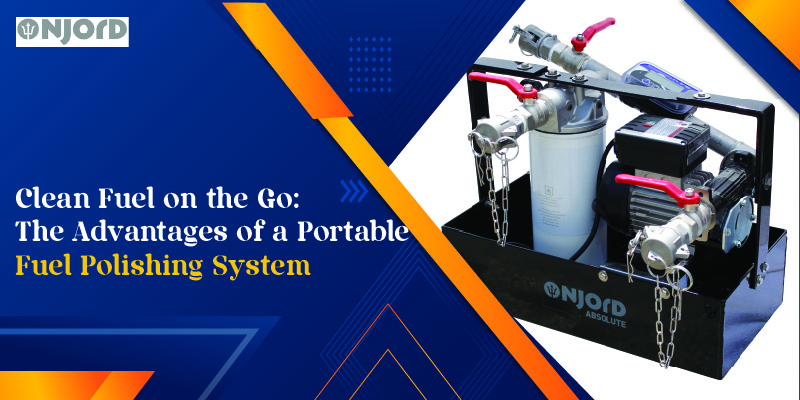
If you manage any kind of equipment that runs on stored diesel fuel, then you must also know that dirty fuel can be a big headache. Over time, any fuel tank can get contaminated with water and a thick sludge that can clog your engines. Cleaning out these tanks can be a very difficult and messy job. But there is a smart and simple solution: the portable fuel polishing system which brings the entire fuel cleaning process directly to your tank wherever it is.
Why is a Mobile Cleaning System a Good Idea?
The biggest reason to use a mobile system is that it is just so much easier. With a portable unit, you do not have to go through the trouble of pumping out all of your dirty fuel and moving it to another location to be cleaned. The machine comes right to your job site, boat, or building, which saves you a lot of time, money and hard work. It takes a big job and makes it so much simpler.
A mobile diesel cleaning unit is also very flexible. A single system can be used to clean a lot of different fuel tanks all at one location. For example, you can clean the tanks of all the heavy machines on a construction site. Or, you can easily move it to a totally different location like servicing a fleet of trucks at your main yard.
What Does a Portable System Do?
This system is designed to remove all the bad stuff from your fuel and leave it in a great condition. Here’s what all it does:
- It Removes Water: The system’s first and most important job is to pull the fuel from the bottom of your tank and run it through a water separator. This removes all of the water which is the main troublemaker that causes most fuel problems. Getting the water out of the tank stops new bacteria and fungi from growing.
- It Filters Out Dirt: After the water is gone, the fuel is then pushed through a series of very fine filters. These filters are made to catch and remove all the sludge, rust, and dirt that can clog up your engine’s filters and injectors. This is the main part of the diesel fuel restoration process.
- It Works on A Lot of Tanks: A portable system comes with its own pumps and long horses. This means it can be quickly and easily connected to a lot of different kinds of fuel tanks. It can be used on everything from the fuel tanks on your heavy equipment to the large backup generator tanks for a building.
- It Cleans the Whole Tank: This is much more than just a simple filtering job. The process of on-site fuel polishing circulates the entire amount of fuel in your tank at a high speed. This strong flow cleans both the fuel itself and also washed down the inside walls of the tank at the same time.
(Also Read: Fuel Maintenance Systems: Protecting Your Investment and Reducing Downtime)
How are These Systems Used in Different Industries?
These mobile systems are useful for many kinds of businesses:
- For Construction Sites: A single portable fuel polishing system can be moved around a large job site from one machine to the next. It can be used to clean the fuel tanks of all your heavy equipment like your excavators and bulldozers. This helps to stop unexpected engine problems that can cause downtime.
- For Marinas and Boats: Many boats sit for long periods of time which allows water to get into their fuel tanks. These systems are a great way to clean out a boat's fuel tank before the start of a new season. This makes sure that the boat's engine will be ready to go.
- For Backup Generators: A lot of important buildings like hospitals or data centers have large backup generators for emergencies. The fuel in these tanks can sit for years and go bad. A portable system is the best way to make sure that the fuel is clean and ready to go when it is needed the most.
Moving Forward
A portable fuel polishing system is a flexible and good way to clean your stored diesel fuel right where it is. It is also a great tool for any business that needs clean fuel to keep its important machinery running well. Visit our website to learn more about our mobile fuel polishing systems at Njord Filteration.
Feel free to contact us at This email address is being protected from spambots. You need JavaScript enabled to view it. if you need fuel tank cleaning services at your location and you don't know what to do.