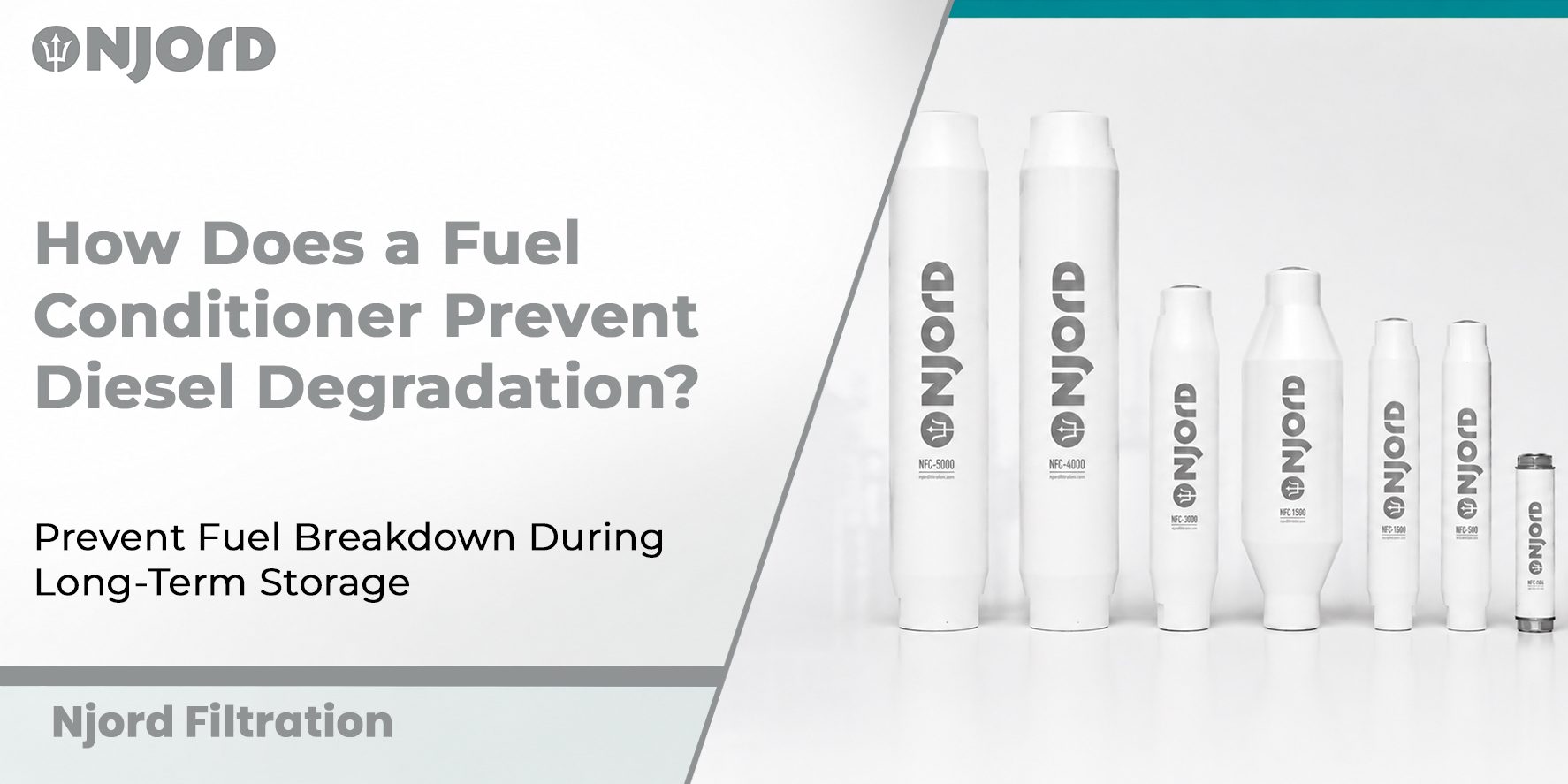
Fuel is not eternal. Air, water, heat- if you let it sit around for too long, the fuel storage problems will start taking place. When this happens, the diesel can get gummy and lose its potency. Suddenly, your engine has trouble starting, runs rough, or burns way more than it used to, which means combustion efficiency is reduced. That’s where the conditioner comes into play. It’s a liquid you add to the diesel to slow this breakdown. It slows the engine oil’s reaction with air, so the damage is way less. Some conditioners even take it a step further by cleaning engine parts, clearing away dirt and old gunk. This conditioner from Njord Filtration will keep your engine cleaner and help it last longer.
Table of Contents:
- What happens with long term fuel storage?
- How does bad fuel affect an engine?
- How does a conditioner help prevent fuel from breaking down?
What happens with long term fuel storage?
The stored engine oil can lose its quality if not maintained properly. It eventually loses its strength to work and becomes thick and gummy. External factors like air, dirt, water, soil and other particles contaminate it.
- Fuel quality degrades - When you store the fuel in the storage tank for a long time, it degrades in quality and becomes weak.
- Contamination occurs - During long-term storage, it builds up sticky materials like gum and sludge that start forming inside the tank.
- Blocks the engine system - Contaminants enter the fuel pump and injectors, eventually blocking them.
- Water contamination - When water mixes with engine oil, it promotes microbial growth in the storage tank.
- Engine damage - When the contaminated oil enters the engine, it reduces the engine performance and eventually causes it to stop working.
- Rusty engine parts - Water particles increase the risk of rust in the tank and inside the engine as well.
Water contamination increases the likelihood of microbial growth in diesel. In such a case, use only Njord Filtration's best fuel conditioner for long-term fuel storage to keep the engine and stored diesel in good condition.
How does bad fuel affect an engine?
Old or dirty diesel oil will cause problems in any engine. If there’s water, dust or sticky deposits mixed in, all sorts of problems arise. Let’s see how fuel degradation affects engine starting and efficiency. Engines may be reluctant to start, and it may be a long time before they start running. Sometimes they don’t even start.
Bad oil means sluggish, weak engines because it doesn’t burn the way it should. That saps power and increases your diesel burn. Dirty ones can also gum things up (like injectors and filters). “If they get blocked, it can’t move the diesel to where it needs to be, which can destroy engine parts and lead to costly repairs.” Plus, bad diesel produces more smoke and pollution.
How does a conditioner help prevent fuel from breaking down?
An engine oil conditioner prolongs the life of the engine and generators. But when it is exposed to heat or water in the open air, it will start to degrade. That's when the trouble starts. The diesel conditioners help slow this down and keep it stable and protected. It prevents the diesel oil from reacting with the air too quickly and helps prevent those sticky deposits that can clog up your engine.
Some conditioners, in fact, clean your engine as they go, keeping things like injectors clean, including the internal parts as well. Others help with water in your storage tank, which is a big deal. Water can cause rust or even allow bugs and bacteria to grow, especially with diesel. This is how the conditioners make your engine easier to start, run smoother and burn it more efficiently.
Conclusion
The stored fuel is mostly used for emergency purposes, but prolonged storage can cause it to become contaminated with external particles. So, contact us and make the engine clean with the best diesel conditioner only at Njord Filtration.
FAQs
- What is the role of a diesel oil conditioner?
The conditioner is basically used to keep the oil clean and enhance its quality. - Can bad fuel damage an engine?
Yes, contaminated oil can damage the internal parts of the engine and can affect the engine performance. - What are signs of low-quality diesel oil?
There are multiple signs of bad quality fuel, like the engine taking time to start, excess smoke, etc.