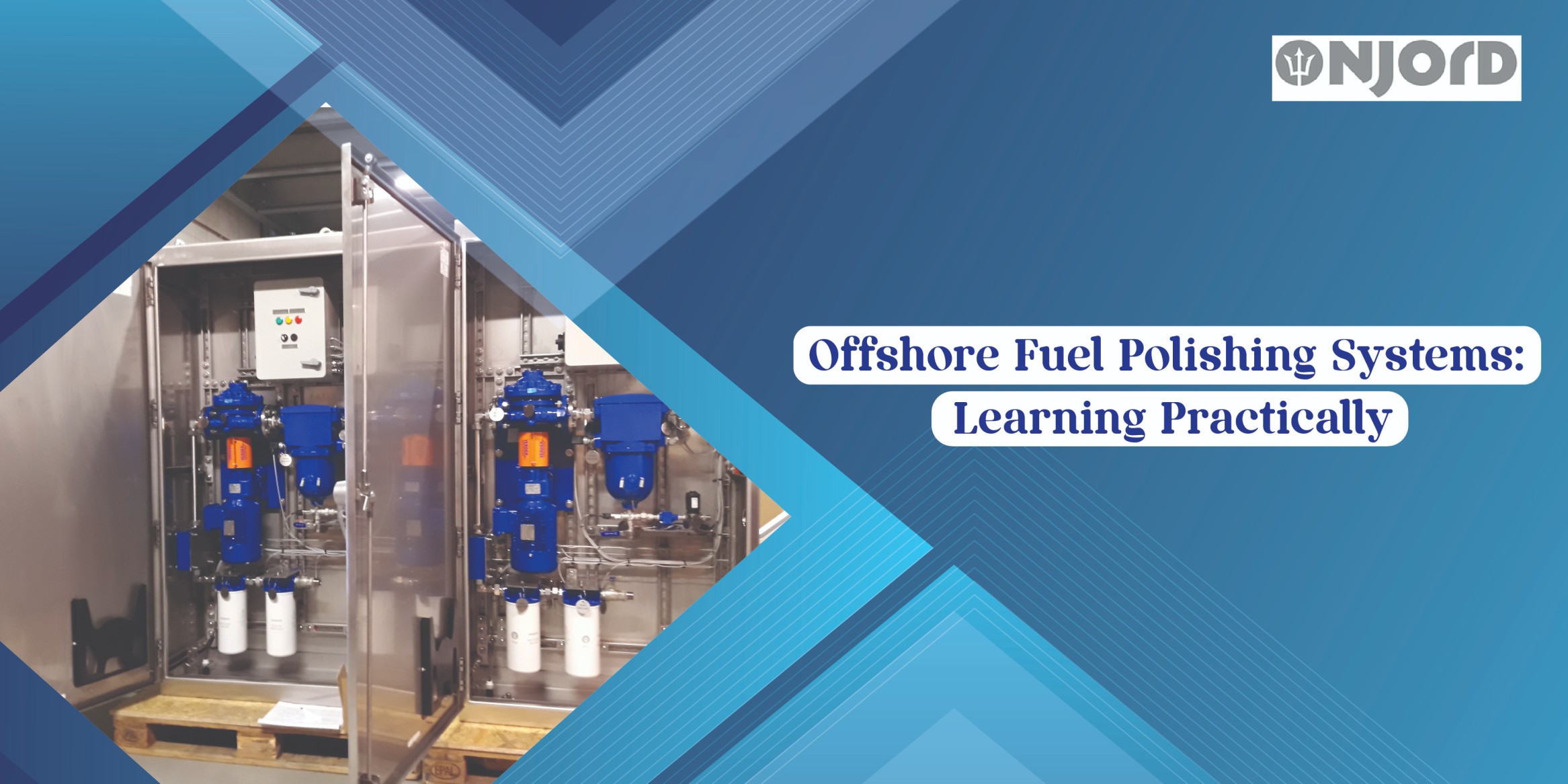
Whether on oil rigs, marine vessels, or offshore wind farms, these operations rely heavily on diesel fuel to power generators, keep critical machinery running, and keep operations running in those isolated, demanding environments. We all know diesel fuel is essential. But did you know that diesel fuel stored offshore can degrade over time due to water contamination, microbial growth, and sediment buildup? That's where fuel polishing systems come in to save the day. Let's just quickly recap on what offshore fuel polishing is all about; its the process of cleaning stored diesel fuel by removing water, dirt, and microbial contamination before it even reaches a generator, engine or any of the critical machinery. A polishing system circulates fuel from the tank through filters and water separators, then returns the clean fuel to the tank or engine system.
To be honest, it's not just a 'nice-to-have' in offshore operations, where fuel can sit in tanks for extended periods, because contamination can lead to issues such as power outages, equipment failures, and increased maintenance costs. Polishing ensures the fuel is in a usable state, enabling smooth, consistent operations.
In today's blog post, we will break down the key aspects of offshore fuel polishing , how these systems protect your equipment, boost reliability, and help you meet technical standards. So, stick with us until the end to get the lowdown on everything.
Are Automated Offshore Fuel Polishing Systems More Effective Than Manual Ones?
Manual polishing systems require an operator to press buttons to start, stop, and monitor each polishing event. This means you need someone on hand to schedule regular polishing sessions, monitor water and sediment levels, replace filters, and manually control pump cycles.
Automated systems, on the other hand, offer significant advantages. For example, they can be set to run at regular intervals, or continuously monitor fuel quality without needing any human intervention, they do a way with human error and make sure you end up with cleaner fuel over time, they reduce labor and downtime so your crew can get on with other important jobs and not have to stop what they are doing to do polishing tasks, and finally, many automated systems can send out alerts and integrate with digital monitoring systems for things like alarms for water, filter life, flow rates and the like.
The key point is that, because offshore locations often have small crews and high stakes for getting things right, automated systems generally outperform manual systems in fuel cleanliness, reliability, and cost-effectiveness.
How is water separated from diesel during the polishing process?
Those who know the problem know that water in diesel is a significant issue. It encourages microbial growth, corrodes metal components, and can clog fuel injectors or filters.
But things will be different in 2026, when modern water-removal systems come online. They use a multi-stage treatment process:
- Coalescing Filters
These filters are pretty clever - they bring tiny water droplets in the fuel together so they can be easily separated. As the droplets combine, they become heavy enough to fall out of the fuel stream under gravity. - Water Separation Chambers
Once the water droplets have grown large enough, they separate from the fuel stream. Here, special filters trap any free or trapped water before the cleaned fuel exits. - Water Catch and Drainage
When you're siphoning off all the water that's been separated from the fuel, it's collected in a separate tank or a drain chamber. Now, many of these systems also automatically drain the water, so it can't re-enter with the fuel. - Fine Filtration
After all the water's gone, the diesel gets run through fine filters - some of them are as fine as 1-5 microns. These filter out any solid matter, such as dirt and rust, and microorganisms. The result is that all water and contaminants are removed, leaving clean, stable fuel ready to use.
( Also read : How to Filter Diesel Fuel Effectively: A Complete Guide to Diesel Filtration Systems )
What are the environmental benefits of using fuel polishing systems offshore?
The following are the benefits you must be aware of:
- Reduced risk of spills and leaks
Dirty fuel can be a real pain - it can corrode tanks and filters, upping the chances you'll leak into your hands. On the flip side, clean fuel gives your components a break and reduces the risk of a nasty spill. - Cleaner combustion equals cleaner air.
When the fuel in your tank is nice and clean of water and sediment, combustion goes more smoothly. That means fewer unburned hydrocarbons and soot entering the atmosphere, which is clearly good news for the air and the planet. - Less waste is always a good thing
Polishing your fuel reduces the amount of waste you need to dispose of due to degradation. That not only means a lower environmental impact but also safer disposal practices. - No water, no microbes - better for the environment
Water and microbes in your fuel can create harmful by-products that corrode your tanks and components. By removing water, you prevent microbial growth, reduce corrosion, and get a little extra life out of your equipment - all of which is good news for the marine environment.
Can fuel polishing prevent diesel engine failures on ships and offshore platforms?
The answer is yes - it can. Here's how:
- Stop blocks before they start
Water and particles can clog your fine filters and fuel injectors quickly. But polish your fuel, and you'll keep those components clean, ensuring a steady fuel flow. - Corrosion is a bad thing.
Water promotes oxidation and corrosion in your fuel storage and delivery systems. By removing water, you help protect your metal components and keep your system running longer. - Clean fuel means better combustion.
Clean fuel burns more efficiently, reducing stress on your fuel system and improving overall engine performance. - Deal with sludge before it becomes an issue.
Sludge is a nightmare - it blocks lines and filters, and it's caused by microbes feeding on water in your fuel. Remove water and contaminants, and you suppress the growth of those harmful microbes. - Reliability is everything when it counts.
Offshore platforms and vessels need to keep on truckin' even after long periods of inactivity. Make sure they've reliable, polished fuel, and you'll avoid costly failures and downtime.
What standards or regulations apply to offshore fuel polishing systems?
Fuel polishing systems aren't always directly overseen, but they play a vital role in meeting the broader fuel quality and marine regulatory standards, such as:
- The International Maritime Organization (IMO) - MARPOL Annex VI
MARPOL Annex VI ensures ships comply, setting limits on sulfur and nitrogen oxide emissions and requiring that the fuel used in engines and generators meet the required standards. While emissions and fuel quality are regulated, polishing plays a key role in helping ships meet those requirements by ensuring the diesel fuel used is of sufficient quality. - Fuel Cleanliness Standards (ISO 4406)
ISO 4406 is a well-used standard for measuring particulate levels in diesel fuel. Here we've got a code like 18/16/13, which lets operators check if their fuel meets the right standards - that it's not too dirty. - Other Standards we should mention (ISO and Industry Specific)
Other standards, such as the water separation performance of ISO 16332 and the particulate counting of ISO 19438, affect how polishing systems are designed and tested. However, classification societies such as DNV, ABS and Lloyd's Register often provide guidelines for equipment used on offshore platforms and vessels. - Fuel Quality Requirements from Flag State and Regional Authorities
There are also national and regional bodies with their own fuel quality and emissions standards, which affect the use of polishing systems. However, a word of advice is always to consult the local regulations where you operate.
Bottom Line
Offshore fuel polishing systems are a sensible investment for any operation that relies on diesel fuel for power generation and to keep equipment mechanically sound. They keep the fuel clean, dry and free of nasty contaminants, reduce maintenance bills and prevent engine failures. They also help fleets and offshore platforms meet environmental and fuel quality standards, improve combustion efficiency, and extend equipment life.
If you're thinking of upgrading your offshore fuel management strategy, don't just think of polishing as a maintenance task; trust Njord Filtration, the ones that keep your operations running smoothly and sustainably.
If you want to know more, get in touch with us .