When you're out on the open water, you know that a faulty fuel supply can be a death sentence, because a faulty fuel supply can lead to serious operational and safety risks, especially when you're miles from anywhere that can provide a top-up. Of course, many boat owners simply store their diesel fuel offshore, but that's still a recipe for disaster. All that harsh marine environment can wreak havoc on your fuel, with heat, humidity, rough seas and long idle periods all conspiring to turn it into a gunked-up, bacteria-ridden mess. And let's be honest, when contaminated fuel starts to poison your engine or generator, it's not just performance that takes a hit; it's safety, too, with clogged filters and unpredictable shutdowns that can leave you stuck in a tight spot. That's where the pros at Njord Filtration come in - with offshore fuel polishing, we can keep your diesel clean, stable and running smoothly, no matter how long it's been sitting or how rough the seas get.
So, in this guide, we'll dive into what offshore fuel polishing systems can remove, how they work, the key components they rely on, and whether marine regulations actually require them. Stay with us until the end, and we'll have you up to speed on everything you need to know.
What contaminants can offshore fuel polishing systems remove from diesel?
In simple terms, a good offshore fuel polishing system is designed to handle a range of contaminants that diesel can pick up, particularly when it sits in the tank for a long time or under less-than-ideal conditions.
The main causes of trouble include:
- Water (free, emulsified or dissolved water) It's pretty standard for diesel tanks to get a bit of condensation or for water to get in during bunkering. And let me tell you, that water can start to cause real problems - even small amounts of water can cause significant problems like corrosion and damage to your engine components.
- Microbial growth or the diesel bug
Now, when you've got water in the tank, all sorts of little critters like bacteria, fungi, algae or yeast can start multiplying in there. And these microbes can eventually turn into sludge, produce acids, and form biofilms that will clog your filters, corrode your systems, and degrade the quality of your diesel. - Solid particles, dirt and sediment
Tiny particles of rust, dust, and dirt from handling or transferring the fuel can get in there, and these solids can clog your injectors or filters and cause all sorts of problems with smooth fuel flow. - Sludge, gums, wax and oxidation by-products
Diesel that just sits around for a while can start to break down, forming nasty varnish, waxy residues, or gums. And that can mess up your fuel stability, reduce combustion efficiency, and even lead to deposits in fuel lines and injectors. - Fine particulates and emulsified contaminants
And then there are the really tiny little particles or contaminants that are so fine or so well mixed that standard filters can't catch them. At that point, you're going to need some fancy fine filters and water absorbers from Njord Filtration to really clean your fuel.
(Also read from our previous blogs: The Hidden Costs of Ignoring Fuel Maintenance in Emergency Systems)
Can fuel polishing systems operate while the vessel is running?
Absolutely! Often, your fuel polishing system can keep on ticking even when the vessel (or its engines/generators) is still chugging along. But, how does it actually work? The truth is that it all happens in a recirculation loop where the fuel is sucked out of a tank, runs through a filter that chucks out the water, particles, sludge, etc and then gets fed right back into the same tank. It's this constant cycle that keeps the fuel clean even when the vessel is moving.
Now, some of these systems do let you transfer the clean fuel from one tank to another, so you can keep on drawing from a nice, clean tank for engine use even while the other tank is getting cleaned. And yeah, to be honest, even if the system is running while the vessel is moving, it won't pick up all the muck that's settled at the bottom of the tank with heavy sludge and all that kind of thing. That's going to need a proper tank clean or a few rounds of recirculation to shift.
So, yes, fuel polishing systems are pretty compatible with vessel operations, which is why they're so good for staying on top of long-term maintenance, not just when the vessel is sitting idle for a good clean.
What are the key components of an offshore fuel polishing system?
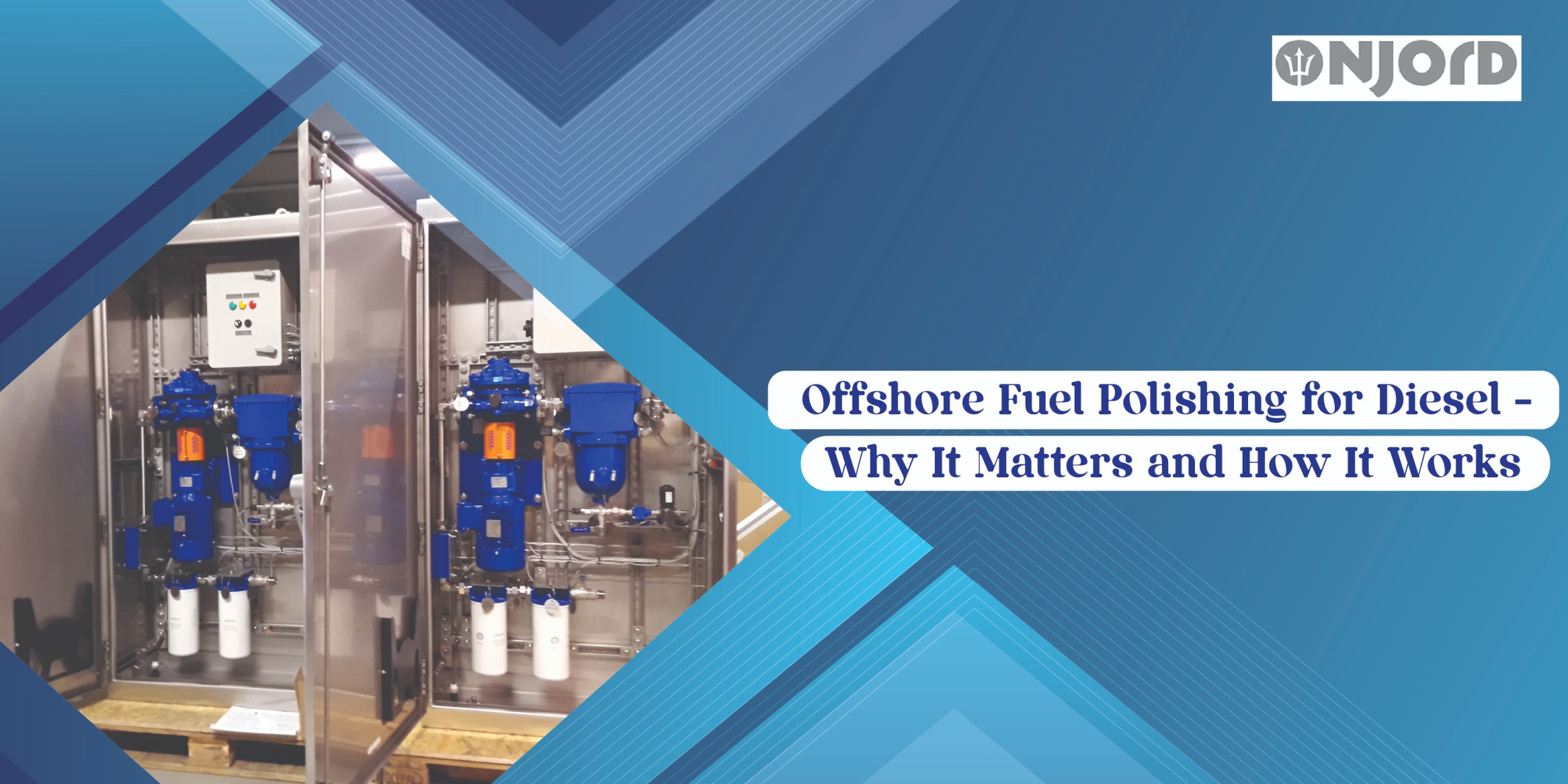
A solid offshore fuel polishing system usually involves a range of parts to get the job done right and maintain fuel quality.
Here are the key components often involved:
- Fuel-water separator (the first step in the process)
This thing uses coalescing filters or centrifuges to remove all the free or emulsified water from the diesel. The idea is that the water separates, and the lighter diesel keeps moving. - Fine particulate filters to really fine-tune the filtration process
After the water's been separated, the diesel's sent through some super-fine filters that might be as small as 1-5 microns to pick up stuff like small particles, sludge, wax, gums, or sediment. - Water-block or absorptive filter elements (one last step to get rid of all the water)
These are designed to suck up any water that's still floating around in the fuel because a little bit of water can wreak havoc on the fuel, considering the harsh marine environment can significantly degrade fuel quality either by letting microorganisms grow or by making combustion go haywire. - Pump, recirculation loop and plumbing (the delivery system)
Now you've got a pump that draws fuel from the tank, sends it through the filters, and then returns it to the same or a different tank - all to keep that fuel clean on an ongoing basis. - Optional fuel conditioner or biocide treatment (for extra protection)
Some systems go the extra mile and throw in some sort of chemical treatment to stop microorganisms from growing in the fuel - especially if that fuel's going to be sitting around for a while after it's been polished. - Control systems, flow meters, tank-selector valves and bypass valves (to make it all more efficient)
In more advanced or offshore-ready systems, these features help manage multiple tanks, monitor flow, switch between tanks, automate the cleaning schedule, and trigger alerts if the filters get clogged.
At the end of the day, all these components work together to get the job done and deliver a seriously clean, filtered fuel supply.
Is fuel polishing mandatory by marine regulations or class societies?
Well, to be honest not exactly. However, more and more it's being seen as a best practice which is increasingly becoming a requirement from engine makers, insurance, and Class societies, depending on how a vessel is used. In reality - many modern engine makers - especially those with common rail diesel engines - demand really pure fuel - with very low water content - under 70 ppm typically and tight controls on particulate matter too - like down to the ISO 18-16-13 cleanliness standard.
The thing is though marine diesel is prone to getting contaminated from all sorts of things, like being stored badly, getting water in it, condensation, or just growing algae in the tank. And that's why onboard fuel polishing has become a pretty good idea as a preventive maintenance thing especially if a vessel is in long term storage, or has backup gensets, or operates on and off a lot.
Bottom Line
Whether it is ships, marine engines, or backup generators, offshore diesel can easily get contaminated and degrade over the time, causing engine failures, costly downtimes and off-time maintenance. When you adapt to Njord Filtration for fuel polishing and filtration, it gives you almost to factory-like quality - pure and unmatched.
So, save yourself from unnecessary hassles and get in touch with us for more information. Contact us here .