Blogs
Mining Industries are Getting Benefits from Fuel Filtration Skids
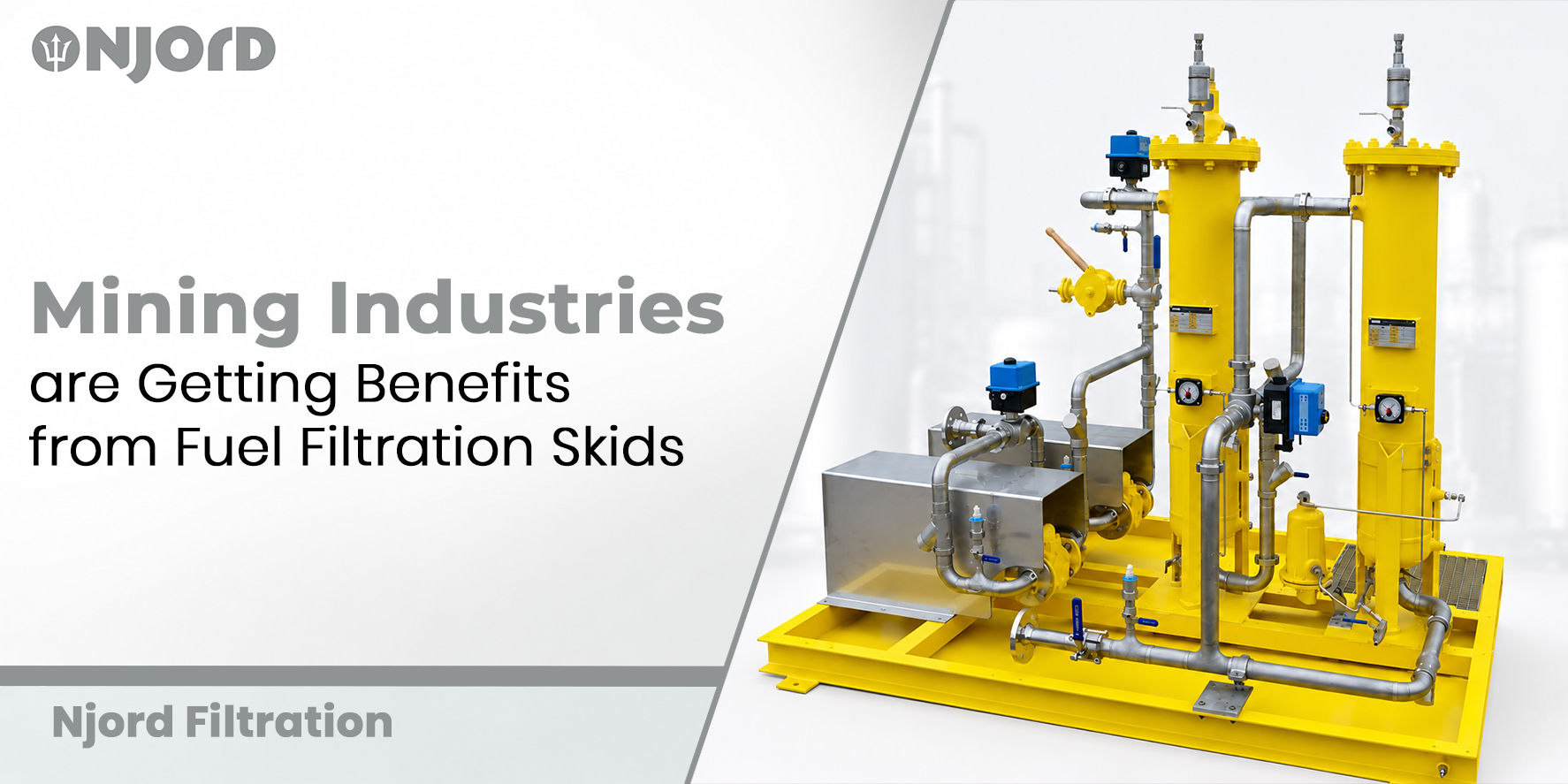
The fuel filtration skids by Njord Filtration clean the fuel before it reaches the machines, keeping mining gear running smoothly. These skids are mounted on skids, and they pull out dirt, water and sludge, a must in difficult mining environments where gear is under constant strain for long hours. Even a little contamination can cause big headaches, such as breakdowns or costly delays. With these skids, fuel stays clean. Engines run better, and machines last longer. Their modular design also allows them to be easily set up in remote locations. That means miners can handle fuel on-site, avoid interruptions, and keep the whole operation moving forward.
Table of Contents:
- What are fuel filtration skids, and how do they work in mining operations?
- What fuel-related challenges do mining and heavy industries commonly face?
- How do fuel forwarding skids improve operational efficiency in mining sites?
What are fuel filtration skids, and how do they work in mining operations?
The fuel filtration skids are pre-engineered systems designed to clean and condition fuel over time. It removes unwanted particles such as water, dirt, soil, dust, and microbial growth. The mining sites are the most sensitive areas where everything needs to be handled carefully. Also, fuel use at mining sites is extensive and frequent. Hence, fuel storage and maintenance are among the most important considerations, as continuous batch filtration of the fuel is required to keep operations running without interruption. It helps maintain fuel quality during storage, transfer and use.
Now let’s see how it works. The fuel is drawn from the storage tank for filtration, keeping it ready for use. The first-stage filtration removes large debris and other particles, and the second stage removes smaller particles, making the fuel cleaner and lighter so it can easily pass through the pipes and the engine works efficiently. The fine filtration removes the water particles as well, and the pumps regulate the flow of the fuel through different stages of filtration then, the in-built monitoring sensors track pressure, flow and the system performance.
With Njord Filtration's fuel filtration skids, the fuel might circulate thoroughly for proper cleaning. Additionally, these skids help maintain proper engine wear and reduce downtime by increasing fuel efficiency. Proper engine combustion will not only reduce maintenance costs but also result in effective, on-time project delivery.
What fuel-related challenges do mining and heavy industries commonly face?
As fuel is one of the most widely used resources in high-performance industries, the challenges are obvious. In this section, we will highlight the problems that industries are actually facing in maintaining fuel quality and addressing fuel contamination.
- The most common problem with the fuel is contamination, which includes water, dust, dirt, wax, metal and microbial particles.
- The inconsistent fuel quality is another issue that varies from one supplier to another. It becomes hard to rely on them in any emergency.
- The loss due to poor fuel monitoring is especially significant in remote areas.
- The fuel in the storage tank starts reacting with oxygen, a process called oxidation and also starts forming sludge inside the tank, which destroys the quality of the fuel.
- Improper management of the fuel tank can cause leakage, and moisture entry can also compromise fuel quality.
- When contaminated fuel enters the engine, it clogs the injectors and fuel pumps, resulting in improper fuel flow.
- Improper fuel combustion will consume more fuel and ultimately shut the engine down.
As a result, the overall situation can hamper the daily operations, not only here but also increase your maintenance costs. Sometimes cases can become severe and require an engine replacement, which can be costly. The fuel filtration skids from Njord Filtration can help reduce both the cost and downtime, maintaining the smooth flow of everyday operations.
How do fuel forwarding skids improve operational efficiency in mining sites?
The mining operations depend heavily on fuel to maintain a steady flow, including uninterrupted equipment operation. Maintaining fuel across the sites, including remote areas, is nearly impossible to track. The fuel filtration skids simplify monitoring and maintaining fuel quality, even in remote mining areas.
- Firstly, it provides a faster fuel supply, meaning the machines can start the engine more quickly.
- A continuous fuel supply with proper filtration reduces machine downtime and improves engine efficiency.
- It filters the contaminant through multiple stages, ensuring the fuel undergoes a thorough cleaning process and emerges lightweight and user-friendly.
- It provides exact tracking of fuel usage to keep everything up to date.
- It reduces the chances of fuel wastage due to spillage, leakage or transfer.
- As this system is portable, it can be easily moved anywhere to maintain proper operational flow.
Last but not least, it improves overall engine efficiency and ensures it runs without interruption. To keep operations running smoothly, smart fuel management is essential, as manual processes are prone to many flaws and inefficiencies.
Conclusion
Our fuel filtration skids are designed to keep fuel clean and deliver it to machines, ensuring smoother, more reliable flow in mining operations. When you use this system, you can enhance productivity by reducing downtime and costs. Contact us to know more about how it works.
FAQs
- Can these fuel skids handle harsh mining conditions?
Yes, our fuel skids are designed to operate in harsh, rough environments. - Do they improve the life of mining equipment?
Yes, because it filters the fuel through multiple stages, it prevents damage to the engine's internal parts and protects the equipment. - Do they help reduce fuel waste in mines?
Yes, it prevents and reduces the risk of fuel wastage during storage and fuel transfer.
Diesel Fuel Degrades Over Time- How Additives Fix It?
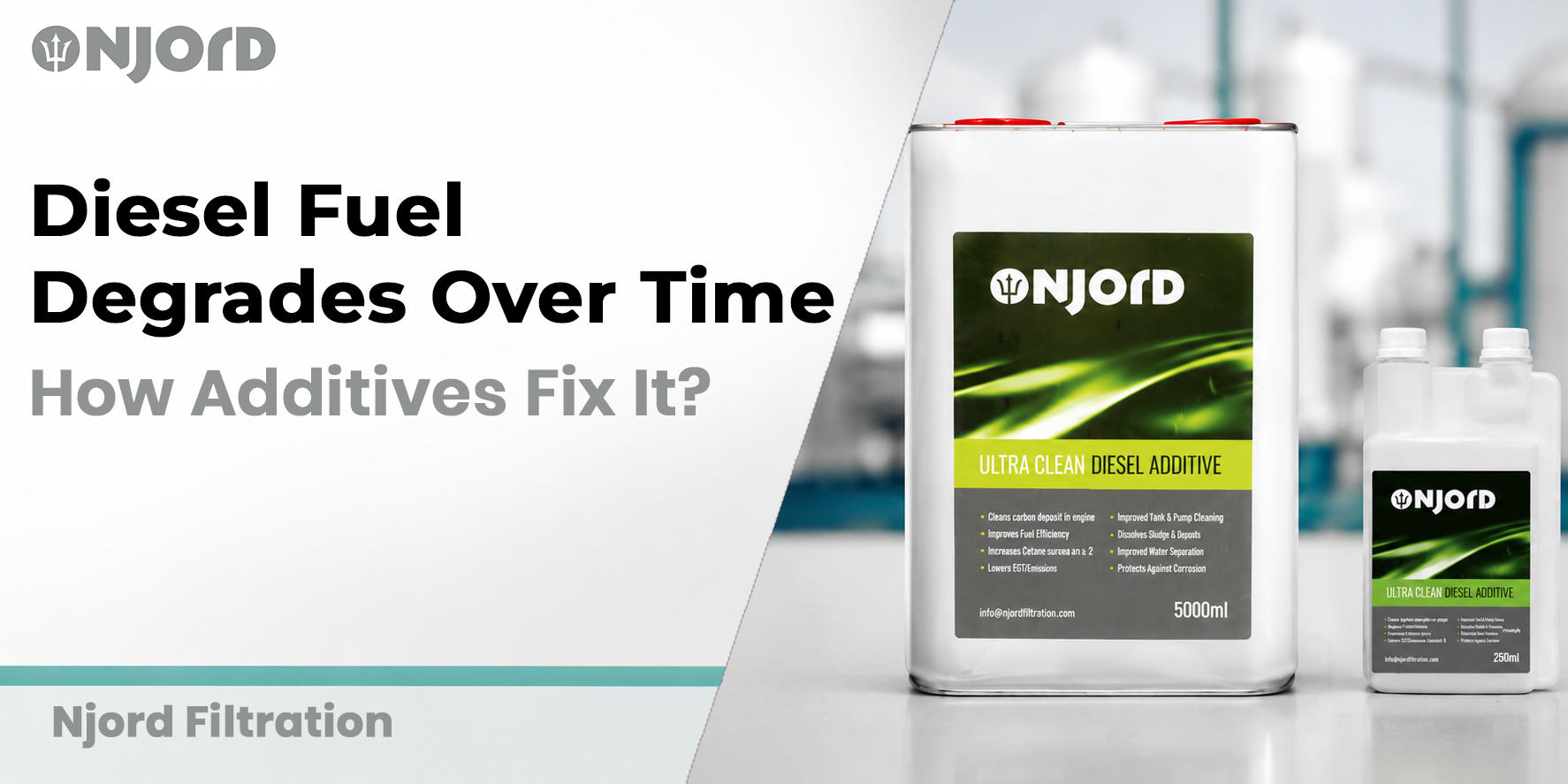
Diesel fuel is typically stored in the fuel tank for later use or for safety. Hence, over time, the fuel tank can accumulate microbial and other external contaminants that pollute the fuel, and when you use it, you find it is already polluted. Once the fuel is contaminated, you cannot use it because it can clog the filters and the injectors. Eventually, it will shut down the engine. In such situations, fuel additives at Njord Filtration can improve fuel quality, allowing engines to run properly without shutting off. During any emergency, if the generator doesn't perform well, it can hamper the operations.
Table of contents:
- Why does diesel fuel degrade over time?
- What happens to engines when degraded diesel fuel is used?
- How do fuel additives help prevent diesel degradation?
Why does diesel fuel degrade over time?
Diesel fuel reacts with oxygen when it comes into contact, causing oxidation. As a result, it forms gums and sludge, which make the fuel thicker and heavier. Heavy-weighted fuel cannot perform well. Another contaminant that can damage the fuel is water particles. The presence of water can promote fungal, microbial and rust growth that can degrade fuel quality. Bacterial growth in fuel tanks can cause more slides and eventually clog the filters and fuel injectors, disrupting fuel flow. The temperature change also affects the fuel's consistency and nature. Excess heat tends to break down the fuel faster. Over time, dirt and sediment particles settle in the fuel, making it dirty. At present, the use of low-sulfur diesel has increased, but compared with old diesel, it is more prone to rapid degradation. As a result, even if you save the fuel in the tank for future use, it will end up contaminated and unusable. Here comes the role of the fuel additives from Njord Filtration: to upgrade fuel quality and keep it ready to use.
What happens to engines when degraded diesel fuel is used?
Using degraded fuel can damage the engine from the inside and, over time, increase your repair and maintenance costs. Sometimes excessive damage may require replacing the engine, which is very expensive. In this section, we will explain exactly what happens when you use contaminated fuel through degraded means.
- Contaminated or degraded fuel burns inefficiently, reducing overall engine power and performance.
- The presence of water particles and sludge clogs the fuel filters, restricting fuel flow through the pipelines and damaging internal components.
- External particles such as dirt, soil and wax can clog the fuel injectors and affect the spray patterns.
- Water in fuel can cause rust and corrosion in the fuel system, leading to poor engine performance.
- The more contaminants in the fuel, the more friction they cause, damaging the parts.
- The incomplete combustion leads to more smoke and other harmful emissions.
As an end note, during any emergency, the engine might stop working, and as a result, operations will be hampered, including safety in many sectors.
How do fuel additives help prevent diesel degradation?
The fuel additives help prevent fuel degradation by protecting it from the key causes of breakdown and keeping it stable for future use. Let’s see how the fuel additives help. The first thing it does is slow down the oxidation process by reducing the reaction with oxygen, resulting in less sludge and gum formation. Biocide additives control and kill microbial growth, including bacteria and fungi, in the fuel. Fuel additives, such as fuel stabilizers, help keep fuel stable longer. Some fuel additives help separate the water particles to keep the fuel free from contaminants. Detergent fuel additives remove deposits from tanks and other engine parts. One of the most important roles of fuel additives is to protect fuel from rust and damage on metal surfaces.
Conclusion
In conclusion, the fuel additives from Njord filtration play a crucial role in keeping your stored fuel clean so that you can use it anytime, including in an emergency. Contact us to learn which additives can protect your fuel from damage. It will save you money and reduce fuel waste.
FAQs
- What are fuel additives used for?
Fuel additives are used to improve the fuel quality so that it can be stored for long-term use. - Which additives are best for long-term fuel storage?
Fuel stabilizers and biocides are commonly used to keep fuel safe and free of contamination. - Do I still need filtration if I use additives?
Yes, the fuel additives are for storage purposes, but filtration with them works best.
From Concept to Commissioning: Njord Containerized Filtration System
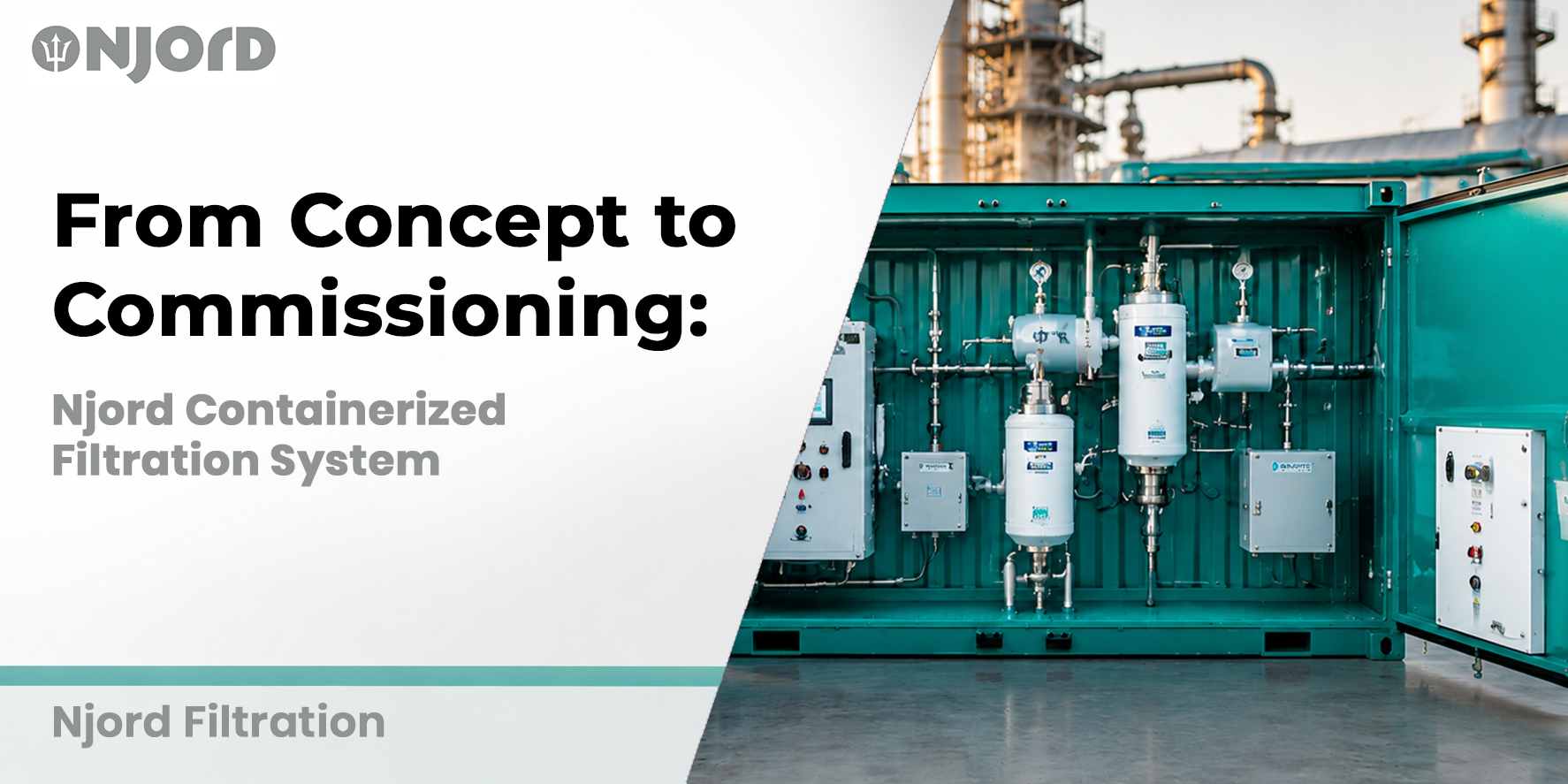
The fuel containerized system is a space where the fuel is stored and filtered for future use. In industries where fuel quality is crucial to performance, even minor contamination can create obstacles during operations. Njord Containerized Systems by Njord Filtration offers a smarter way, combining advanced filtration in a single containerized system to improve performance. From planning to the final steps, we have created a space where not only can fuel be stored, but the filtration process can also be performed smoothly, ensuring the engine system runs properly.
Table of contents:
- What is a containerized filtration system, and how is it different from traditional setups?
- What problems do these systems solve in fuel and fluid management?
- How do containerized systems reduce downtime and operational risks?
What is a containerized filtration system, and how is it different from traditional setups?
The need for clean fuel is one of the most crucial aspects of daily operations and of maintaining the engine system efficiently. Instead of building a complicated on-site filtration system, you can easily rely on the ready-to-use Njord Containerized Systems to filter and store fuel.
- A containerized filtration system is an integrated filtration system housed inside a shipping container, keeping the fuel away from contamination.
- This system includes filters, pipes, pumps and a control system to monitor and track system performance.
- It is movable and travel-friendly, along with an easy-to-install, user-friendly system that requires no complicated instructions.
- The system consists of an automation and monitoring system to track fuel performance and the filtration process.
It is different from the traditional fuel filtration system. In terms of installation, the traditional approach is pre-built components, while the containerized system is built on-site. The containerized system takes less time to deploy and is portable, allowing it to be deployed anywhere as needed. Also, this new system is scalable; hence, it can be converted into a fixed filtration system.
What problems do these systems solve in fuel management?
Multiple issues can arise during fuel management and affect end-user usability, including emergencies. Fuel contamination and poor-quality maintenance can reduce the effective performance of the engines and generators, preventing them from running smoothly. Our containerized system is designed to solve these problems more reliably and efficiently. Have a look.
- The first thing is fuel contamination. The containerized system removes unwanted contaminants such as dirt, wax, dust and water particles to provide cleaner fuel.
- It helps prevent engine breakdowns caused by contaminated fuel.
- It helps run the system smoothly without interruption by reducing stoppage gaps, thereby reducing downtime.
- The multi-stage filtration prevents external contaminant particles and keeps the fuel ready to use.
- Apart from the traditional system, it eliminates the complicated installation just to save time and makes it user-friendly.
- It takes up limited space, as all the components are housed in a single unit.
- Overall, it makes servicing easier and more effective.
The best part is that when you need fuel and harsh weather is preventing the transportation system from delivering on time, Njord Filtration's Njord containerized systems are the best choice.
See what to choose? Fuel polishing or tank cleaning?
How do containerized systems reduce downtime and operational risks?
The most problematic situation is the sudden breakdown of the engine or the backup generator. Once the system is stopped, the entire system is interrupted, leading to late project delivery. As a result, it has an overall impact on the business, as you can see. But not with the presence of our Njord containerized systems.
This system provides clean fuel to keep the operations running efficiently and properly. The best part is that it keeps the fuel cleaning process running continuously, even while the system is operating. The clean fuel keeps the internal parts free of damage and helps them work best. This system also detects early problems and monitors performance to track them for scalability. It reduces excess investment costs and downtime.
Conclusion
The Njord containerized systems offer a cleaner, more efficient solution that can save you time and money. On top of that, it will provide the highest-quality fuel to keep operations running smoothly. Contact us and let us know your requirement, and we will help you solve it.
FAQs
- Can this system be moved?
Yes, our containerized system is portable, and you can take it anywhere to manage fuel. - Do they need constant maintenance?
Maintenance is quicker and simpler compared to the traditional setup. - Can I use this in remote areas?
Yes, absolutely, you can use it, especially in remote areas, for fuel management. It will reduce the dependency on frequent fuel transportation.
Why Data Centers and Hospitals Need Self-Cleaning Fuel Tank for Backup
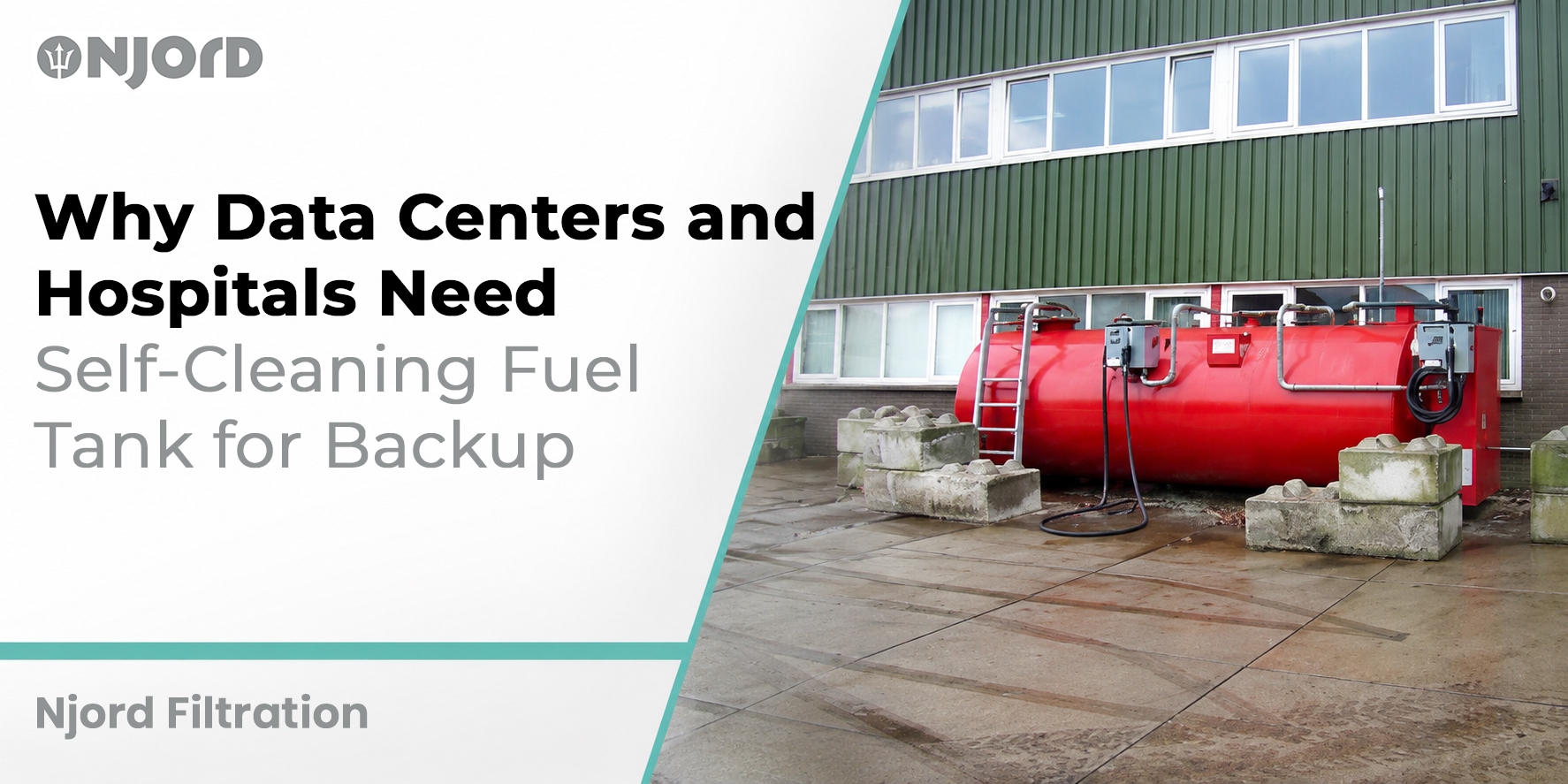
In places like data centers and hospitals, power must remain uninterrupted. With sensitivity in mind, a single power cut can cause many complications. So, as backup power, you use the generators during any power outage; they run on diesel fuel. Hence, maintaining the diesel fuel to keep the generators working properly is another of the most important responsibilities to bear.
Over time, diesel fuel becomes dirty and contaminated with external particles. If not properly cleaned, then several issues can arise. But cleaning means filtering and fuel polishing, which are not always possible to do manually, which is why self-cleaning fuel tanks by Njord Filtration are the best choice you can make.
Table of contents:
- What happens if contaminated fuel is used in emergency generators?
- Why is zero downtime crucial for data centers and hospitals?
- How do self-cleaning tanks support compliance and safety standards in healthcare and Data centers?
What happens if contaminated fuel is used in emergency generators?
The use of contaminated fuel in generators can cause many problems, especially in critical facilities like hospitals and data centers. Now, what is contaminated fuel? Contaminated fuel is fuel that contains external particles such as water, dirt, dust, wax, metal, soil, microbes, fungi and more. These external particles pollute the fuel and make it heavy.
If this contaminated fuel enters the generator, the internal parts will be damaged. The injector and filter will get jammed, and eventually, this will hamper the flow of fuel to other parts as well. As a result, they will want to produce more fuel, but after a certain period of time, the engine will ultimately stop working, and so will the generator. Such a situation can arise if you do not properly maintain the fuel filtration. To avoid such situations, we have installed Njord self-cleaning fuel tanks from Njord Filtration that clean the fuel automatically, without your intervention.
Why is zero downtime crucial for data centers and hospitals?
In a critical environment where every second counts, uninterrupted power is essential. Places like data centers and hospitals deal with sensitive data and patients, respectively. Hence, a constant power is required to keep the operations running smoothly and efficiently. Zero downtime is not just a goal but a necessity to ensure safety, reliability and smooth functioning.
Even a short loss of power can corrupt the data in the data center, and what if, during any critical operation, the power goes off? A single second can be crucial in affecting the daily operations of both hospitals and data centers. The most important point is that it maintains the organization’s reputation. Further power cuts can damage the brand image of both the hospital and the data centers because the question of security and safety is compromised here. Hence, keeping the emergency power backup in a ready-to-use condition is your ultimate responsibility. Go with Njord self-cleaning fuel tanks to keep every operation and crucial activity running smoothly.
How do self-cleaning tanks support compliance and safety standards in healthcare and Data centers?
The Njord self-cleaning fuel tanks can save you time and keep your focus on your work without any worry or interference. In this section, you will see how a self-cleaning fuel tank can provide ultimate safety and ensure smooth operations.
- The first thing it does is maintain the fuel quality. The continuous filtration removes unwanted particles, keeping the fuel clean and ready to use.
- Clean fuel means no damage to the internal parts. Hence, the generator runs perfectly without breaking down.
- The clean fuel extends the engine life, including the generators. As a result, maintenance and repairs don't take place often.
- Overall, it maintains consistency by reducing the risk of emergency failure during a power outage.
- It also improves system monitoring, builds strong team coordination and helps them stay compliant with safety checks.
- By preventing the growth of sludge and microbes, these self-cleaning tanks help reduce the risk of hazards that can appear if not cleaned properly.
As you can see, you need a self-cleaning fuel tank, not because we are saying so, but because it's essential to running the entire operation efficiently with less effort.
Conclusion
In conclusion, self-cleaning tanks are a reliable solution, which is crucial for maintaining compliance in critical areas such as data centers and hospitals. So, without wasting time, contact us and get yourself a self-cleaning fuel tank because no one wants to compromise with safety.
FAQs
- Can contaminated fuel really cause generator failure?
Yes, contaminated fuel increases the risk of clogged filters, which can damage internal engine parts and even cause engine failure. - Do self-cleaning tanks help with compliance and audits?
The self-cleaning fuel tank continuously filters the fuel and maintains fuel quality, helping it pass inspections and audits. - Are these systems cost-effective?
Yes, it reduces the maintenance and engine repair costs and extends the engine life in the long run.
Upgradable Fuel Systems: Investing Smart Without Overspending
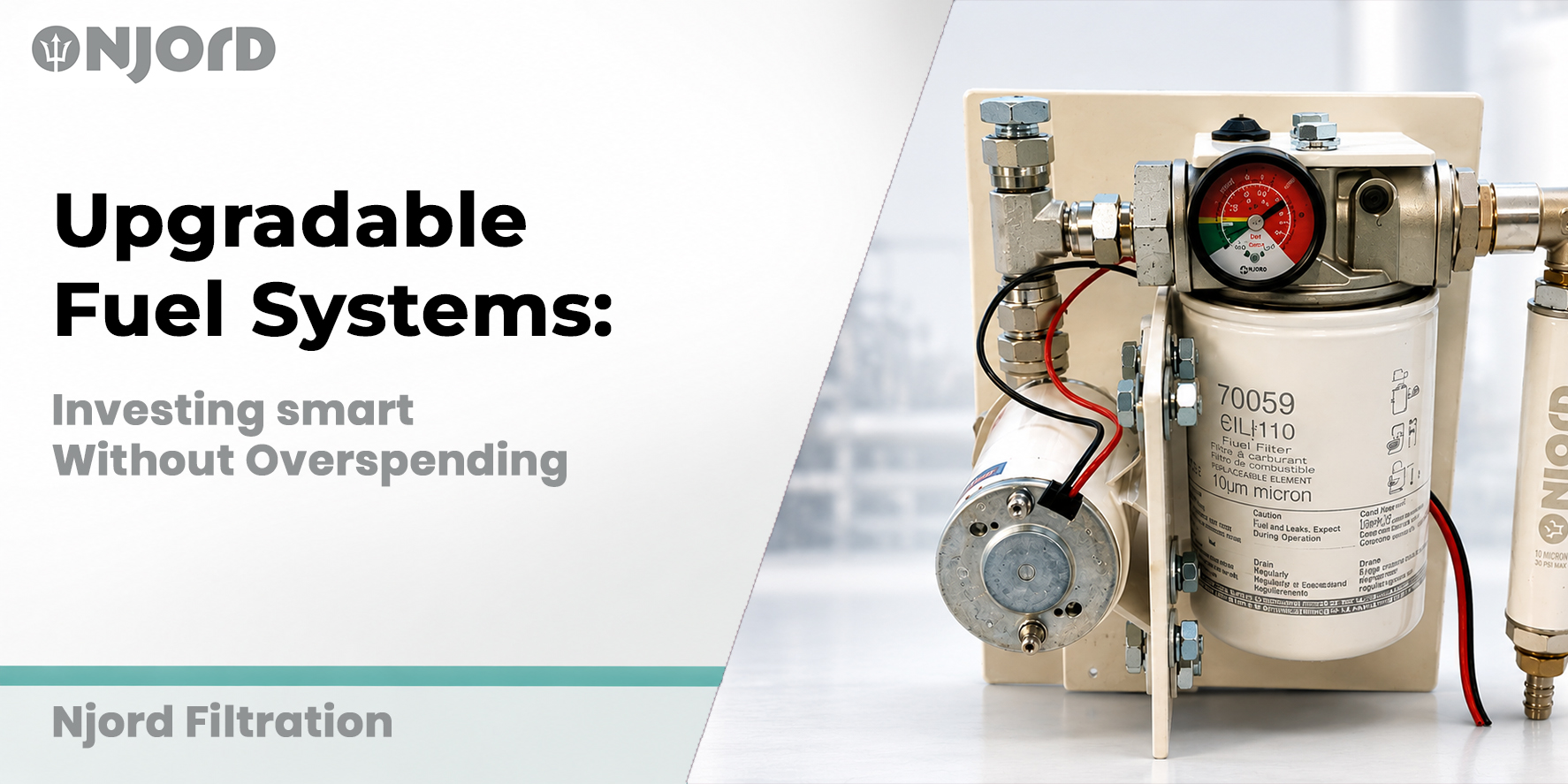
In the era of inflation, almost every business is looking for a smarter way to store and manage the fuel to run the daily operations efficiently. The fuel management system includes many other processes to keep the fuel clean and free of contamination, ensuring it is ready for use. Hence, the business has a portion of its expenditure on the fuel polishing system, which you cannot deny. But not every business requires a fixed setup for the fuel management system. The ultimate convertible polishing systems of the fuel by Njord Filtration are the ideal choice for them. In this blog, we will explain how a convertible fuel system enhances operational efficiency more cost-effectively.
Table of contents:
- What is a convertible fuel polishing system, and how does it work?
- What challenges arise with non-upgradable polishing systems?
- How do convertible systems address fuel contamination issues affordably?
What is a convertible fuel polishing system, and how does it work?
Businesses such as construction, marine and shipping companies, power generation, transportation and logistics companies, manufacturing industries, and many more are more inclined to use fuel, especially during an emergency. Not always does a fixed setup of a fuel management system help. To maintain the system effectively, the convertible polishing system is key.
- In a convertible polishing system, fuel circulation is the process of drawing fuel from the storage tank to maintain flow in the unit.
- This polishing system removes unwanted particles such as water, dust, wax, dirt and microbial growth to keep the fuel ready to use.
- In this system, the fuel passes through multiple steps to filter the fuel for the intended use.
- In the stages of filtration, there is a specific stage where the system removes fuel from water particles that can cause microbial growth.
- There are also additive and conditioning steps to keep the fuel clean and enhance its quality.
- The sensors, installed inside the system, monitor fuel filtration, including flow rate and system performance.
- It works as both a portable and a fixed fuel management system to maintain efficient, constant fuel flow.
As a result, Njord Filtration's convertible polishing system for fuel works for both remote and on-site fuel polishing, enabling uninterrupted daily operations.
See how you can extend the engine’s longevity with Njord Filtration?
What challenges arise with non-upgradable polishing systems?
The non-upgradable fuel polishing system may make you think it is affordable, but the after-effect can increase your expenses. Businesses that lack an upgradable fuel polishing system face multiple challenges. Without the proper system, the business starts to face inefficiencies, high long-term costs, and low performance. When a business changes its requirements, then the system needs to be replaced accordingly. When your fuel polishing system fails, you need to make a decision, but it comes at a higher cost.
A limited or fixed fuel polishing system cannot adapt to changes in requirements, such as increased fuel volume. The older system lacks maintenance quality and fails to perform effectively. Hence, overall downtime increases, as do other operations. When the system fails to provide clean fuel, it also damages other internal parts in the generators. During an emergency, inefficient internal components can cause sudden engine failure and disrupt operations. The convertible polishing system from Njord Filtration is the ultimate solution for businesses looking to increase productivity without obstacles.
How do convertible systems address fuel contamination issues affordably?
The convertible fuel polishing system is a specific approach to treating contaminated fuel without incurring additional investment. This system combines the mobility and fuel polishing stages, providing clean fuel and real-time performance monitoring and tracking. When we talk about affordability, it means reducing your excess maintenance costs, frequent repairing costs and engine replacement as well.
If you know the importance of fuel polishing, you should know how quickly and affordably you can avail yourself of it to ensure uninterrupted operations without delay. The multi-stage filtration process ensures clean fuel is transferred, so other internal parts stay damage-free. The lesser the damage, the lesser the maintenance cost will be. So, switch to our convertible polishing system for cleaner fuel from Njord Filtration.
Conclusion
To maintain a smooth business flow without worrying much about maintenance and repair costs, you can opt for the best fuel polishing solution to keep the engines ready for any emergency. Connect with us to learn about the features of our convertible polishing system.
FAQs
- Why choose the convertible fuel system?
Our convertible polishing system is flexible, allowing you to upgrade from portable to fixed without any hassle. - Is the system affordable?
Yes, it is lower in cost because it reduces the risk of spillage and wastage and prevents the need for an entire system replacement. - What businesses can use this polishing system?
Businesses like: marine and transport, power generation, construction sites, especially remote sites, can take the best advantage of it.