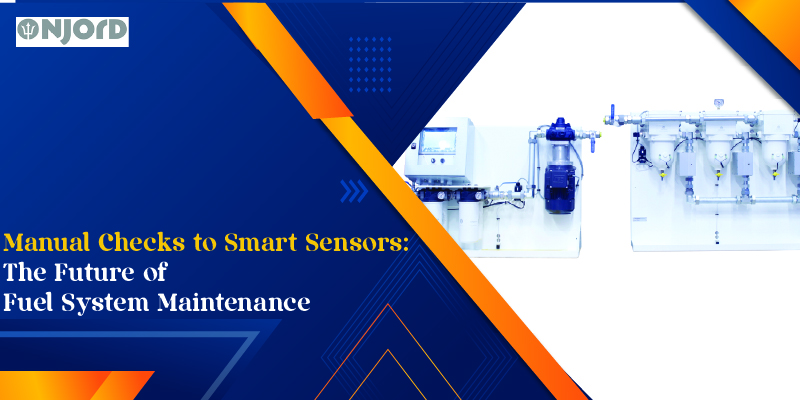
Whether it's powering backup generators in hospitals or keeping ships crossing oceans, fuel is the lifeblood of many industries. But one thing most people overlook is that fuel is only as good as the system that maintains it. Over time, contaminants such as water, microbial growth, and sediment can damage fuel, leading to costly breakdowns and failures. Previously, operators relied on manual checks and routine inspections to maintain clean fuel and ensure the systems ran smoothly. While this old method worked in the past, today's world demands more reliability, efficiency and automation. And that's where the future of fuel maintenance systems comes in. This is moving towards smart sensors, IoT, and real-time monitoring, allowing operators to save time and achieve better results.
In this blog, we will discuss how the industries benefited when they switched from manual checks to smart sensors and how Njord Filtration has played a significant role in changing the game for industries that rely on fuel maintenance. So, keep reading to learn more about it with the expert.
But first, let us break down the journey of fuel maintenance.
The Evolution of Fuel Maintenance
The basic fuel filtration system was introduced in the early 1900s; However, between 1950 and 1960, when diesel engines gained popularity in primary industries, an advanced filtration system was needed that could also separate water and other harmful contaminants from the fuel.
Considering its long destination, let the following breakdown the journey of fuel maintenance:
-
Manual Inspections and Reactive Maintenance
In the early days, as we mentioned, operators would physically inspect tanks and fuel filters, using dipsticks or visual inspection. But here, the maintenance was reactive, meaning the issues were only addressed after they occurred. Although the process was simple, this resulted in unplanned downtime and high repair costs.
-
Scheduled Preventive Maintenance
As fuel systems became more complex, larger industries began to adopt scheduled maintenance, where filters were changed on a set timeline rather than based on condition. This reduced failures, but it was not always efficient as filters were changed too early or contamination was missed between inspections.
-
Modern Fuel Polishing & Testing
Nowadays, almost every big and small organisation uses fuel polishing, which circulates and filters stored fuel to remove water and contaminants. In this case, regular fuel testing helps ensure compliance with and maintain quality standards.
(Also read from our previous blogs: How are Fuel Polishing Systems Important for Oil and Gas High-Risk Operations?)
Traditional Methods vs. Modern Digital Monitoring
So, which is the better choice between a traditional method and a modern digital fuel maintenance system? Let the following explain:
- The Traditional Manual Method
- Reliability
Reliability varied, and fuel quality was inconsistent due to manual visual checks, manual sampling, and scheduled filter changes. - Accuracy
Task completion depended on operator skill and timing. - Costs
Budgeting was higher due to reactive repairs and premature filter changes. - Downtime
The most significant disadvantage was downtime, as failures weren’t always detected early. - Data collection
There was minimal data, no tracking or analysis that could guide the operator for future use.
- Modern Digital Monitoring
- Monitoring
Modern fuel maintenance systems utilise continuous monitoring with IoT sensors to provide a constant view of fuel quality. - Real-time data
Some of the benefits are real-time, highly accurate data on contaminants, water content and stability. - Cost-effective
Predictive maintenance and optimised filter cycles mean you save a lot of money that would otherwise be wasted. - Reduced Downtime
Modern systems minimise downtime by detecting and addressing issues before they lead to failures. - Detailed data
These systems can generate detailed logs, reports and trend analysis to help you make better decisions. - Reliable
And, finally, they offer consistent and reliable fuel quality, especially in critical environments.
How Njord Filtration fits into the future of Fuel Maintenance Systems?
Njord Filtration always looks forward to the evolution of fuel maintenance systems that will be ten times more advanced than it is today. We focus on going beyond alerts with our AI-driven analytics, as well as ensuring that they offer automated corrective actions that not only detect issues but also provide corrective responses, such as automatically activating polishing units. Thanks to which. Industries can now adapt to smart monitoring and receive the best results.
Bottom Line
Fuel is an easy resource, but maintaining it can be hectic. With Njord Filtration, you get advanced fuel maintenance systems that are efficient, reliable, cost-saving, and promise sustainability. Because in 2025, just polishing the systems isn't the only answer; a more innovative, energy management system plays a greater role.
Have queries? Get in touch with us today !