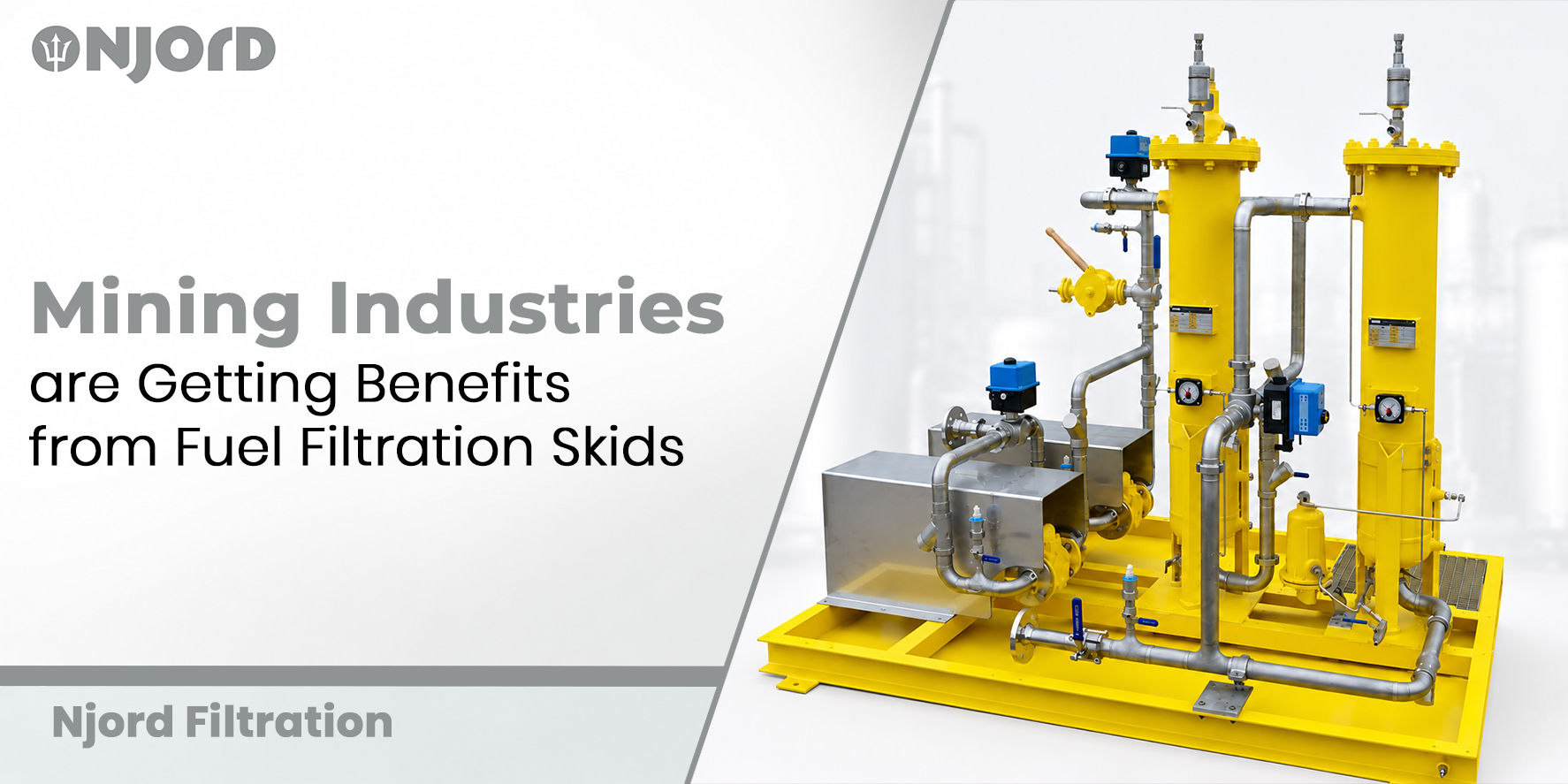
The fuel filtration skids by Njord Filtration clean the fuel before it reaches the machines, keeping mining gear running smoothly. These skids are mounted on skids, and they pull out dirt, water and sludge, a must in difficult mining environments where gear is under constant strain for long hours. Even a little contamination can cause big headaches, such as breakdowns or costly delays. With these skids, fuel stays clean. Engines run better, and machines last longer. Their modular design also allows them to be easily set up in remote locations. That means miners can handle fuel on-site, avoid interruptions, and keep the whole operation moving forward.
Table of Contents:
- What are fuel filtration skids, and how do they work in mining operations?
- What fuel-related challenges do mining and heavy industries commonly face?
- How do fuel forwarding skids improve operational efficiency in mining sites?
What are fuel filtration skids, and how do they work in mining operations?
The fuel filtration skids are pre-engineered systems designed to clean and condition fuel over time. It removes unwanted particles such as water, dirt, soil, dust, and microbial growth. The mining sites are the most sensitive areas where everything needs to be handled carefully. Also, fuel use at mining sites is extensive and frequent. Hence, fuel storage and maintenance are among the most important considerations, as continuous batch filtration of the fuel is required to keep operations running without interruption. It helps maintain fuel quality during storage, transfer and use.
Now let’s see how it works. The fuel is drawn from the storage tank for filtration, keeping it ready for use. The first-stage filtration removes large debris and other particles, and the second stage removes smaller particles, making the fuel cleaner and lighter so it can easily pass through the pipes and the engine works efficiently. The fine filtration removes the water particles as well, and the pumps regulate the flow of the fuel through different stages of filtration then, the in-built monitoring sensors track pressure, flow and the system performance.
With Njord Filtration's fuel filtration skids, the fuel might circulate thoroughly for proper cleaning. Additionally, these skids help maintain proper engine wear and reduce downtime by increasing fuel efficiency. Proper engine combustion will not only reduce maintenance costs but also result in effective, on-time project delivery.
What fuel-related challenges do mining and heavy industries commonly face?
As fuel is one of the most widely used resources in high-performance industries, the challenges are obvious. In this section, we will highlight the problems that industries are actually facing in maintaining fuel quality and addressing fuel contamination.
- The most common problem with the fuel is contamination, which includes water, dust, dirt, wax, metal and microbial particles.
- The inconsistent fuel quality is another issue that varies from one supplier to another. It becomes hard to rely on them in any emergency.
- The loss due to poor fuel monitoring is especially significant in remote areas.
- The fuel in the storage tank starts reacting with oxygen, a process called oxidation and also starts forming sludge inside the tank, which destroys the quality of the fuel.
- Improper management of the fuel tank can cause leakage, and moisture entry can also compromise fuel quality.
- When contaminated fuel enters the engine, it clogs the injectors and fuel pumps, resulting in improper fuel flow.
- Improper fuel combustion will consume more fuel and ultimately shut the engine down.
As a result, the overall situation can hamper the daily operations, not only here but also increase your maintenance costs. Sometimes cases can become severe and require an engine replacement, which can be costly. The fuel filtration skids from Njord Filtration can help reduce both the cost and downtime, maintaining the smooth flow of everyday operations.
How do fuel forwarding skids improve operational efficiency in mining sites?
The mining operations depend heavily on fuel to maintain a steady flow, including uninterrupted equipment operation. Maintaining fuel across the sites, including remote areas, is nearly impossible to track. The fuel filtration skids simplify monitoring and maintaining fuel quality, even in remote mining areas.
- Firstly, it provides a faster fuel supply, meaning the machines can start the engine more quickly.
- A continuous fuel supply with proper filtration reduces machine downtime and improves engine efficiency.
- It filters the contaminant through multiple stages, ensuring the fuel undergoes a thorough cleaning process and emerges lightweight and user-friendly.
- It provides exact tracking of fuel usage to keep everything up to date.
- It reduces the chances of fuel wastage due to spillage, leakage or transfer.
- As this system is portable, it can be easily moved anywhere to maintain proper operational flow.
Last but not least, it improves overall engine efficiency and ensures it runs without interruption. To keep operations running smoothly, smart fuel management is essential, as manual processes are prone to many flaws and inefficiencies.
Conclusion
Our fuel filtration skids are designed to keep fuel clean and deliver it to machines, ensuring smoother, more reliable flow in mining operations. When you use this system, you can enhance productivity by reducing downtime and costs. Contact us to know more about how it works.
FAQs
- Can these fuel skids handle harsh mining conditions?
Yes, our fuel skids are designed to operate in harsh, rough environments. - Do they improve the life of mining equipment?
Yes, because it filters the fuel through multiple stages, it prevents damage to the engine's internal parts and protects the equipment. - Do they help reduce fuel waste in mines?
Yes, it prevents and reduces the risk of fuel wastage during storage and fuel transfer.